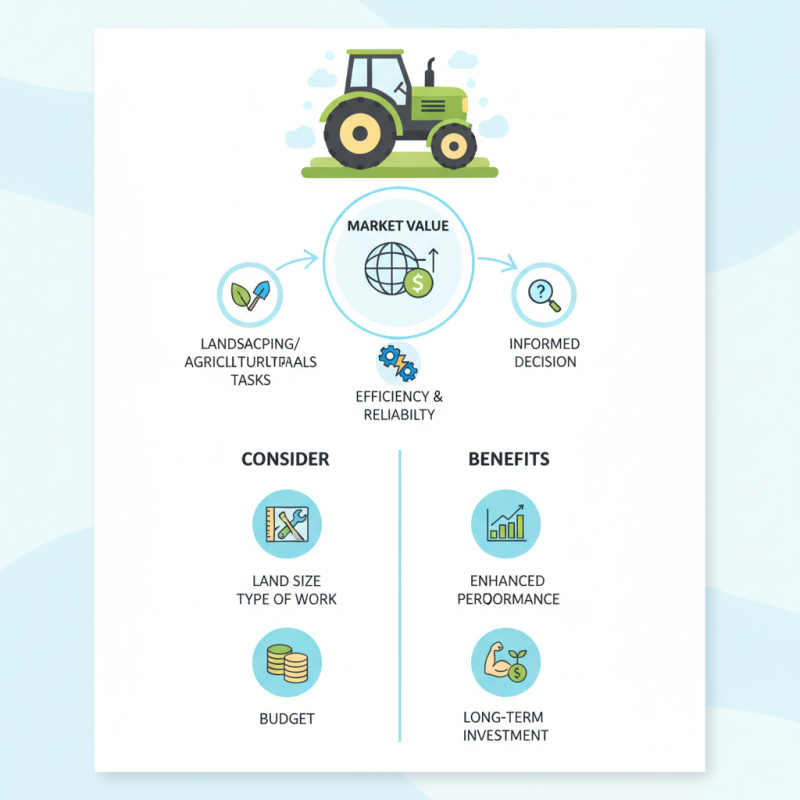
Choosing the right small tractor is essential for farmers and landowners. The global small tractor market was valued at approximately $57 billion in 2020, with a significant growth rate expected in the coming years. This growth highlights the importance of making an informed decision when purchasing.
Small tractors serve various purposes, from landscaping to agricultural tasks. However, selecting one can be challenging due to numerous options available. Each model may offer different features, power levels, and costs. Understanding your specific needs is crucial.
Reports show that efficiency and reliability are key factors for buyers. With proper research, consumers can avoid costly mistakes. They should consider their land size, type of work, and budget. Identifying these needs will lead to better long-term investments. Ultimately, the right small tractor can enhance productivity and improve overall performance. Making a thoughtful choice provides significant returns.
Understanding Your Farming Needs and Land Size
When choosing the right small tractor, understanding your farming needs is crucial. Every farm is unique, with specific tasks that require different types of equipment. Are you managing a few acres or an extensive property? Think about the primary activities you'll undertake. Will you be plowing, planting, or hauling? Knowing your requirements helps clarify the machinery you truly need.
Land size plays a significant role in this decision. A small tractor may suffice for a garden or small field. However, larger plots with varied terrain may demand more power or versatility. Take a close look at the specifics of your land. Is it hilly, flat, or does it have narrow paths? Each factor can influence your tractor choice.
These considerations aren't always straightforward. Farmers often face trade-offs. You might find a model perfect for your tasks, but it could be larger than your space allows. Alternatively, a compact model may serve your needs but lacks power for certain jobs. Reflect on what is most critical for your operations. Making the right selection can enhance efficiency and productivity in the long run.
Evaluating Different Types of Small Tractors
When exploring small tractors, consider their types. Different models serve various needs. For small farms, a compact utility tractor offers versatility. These tractors are robust yet easy to maneuver. They can handle various tasks, from tilling to mowing.
Another type is the garden tractor. This model is ideal for maintaining a yard or large garden. It's lighter and easier to handle in tight spaces. However, it's less powerful for heavy-duty work. If you only need occasional use, a garden tractor may be sufficient.
Think about your specific requirements. Assess the terrain where you’ll work. Some tractors perform better on hills or rough ground. Additionally, reflect on attachments. Will you need a plow, mower, or loader? The right tractor should adapt to your tasks. Ensure it meets your comfort and usability standards.
Analyzing Engine Power and Performance Metrics
When choosing a small tractor, evaluating engine power and performance metrics is vital. Engine power is typically measured in horsepower (HP). A higher HP often means better performance, especially for heavier tasks like plowing or hauling. However, too much power can lead to inefficiencies. Overpowered tractors may waste fuel and strain on smaller tasks.
Consider the torque rating as well. Torque, which reflects the engine’s pulling power, is crucial when dealing with tough terrain. A tractor with high torque remains efficient even at low RPMs. This is beneficial for tasks such as tilling or moving heavy loads. Look for tractors that balance horsepower and torque for versatile usage.
Performance metrics should also include fuel efficiency and speed. Some tractors perform well but consume excessive fuel. Others may not have the acceleration needed for quick jobs. Checking user reviews can shed light on real-world performance. Seek feedback on long-term reliability too, as consistent maintenance is essential. Remember, a mismatch between engine specs and your needs could lead to frustration and inefficiency.
Engine Power and Performance of Small Tractors
Considering Budget and Financing Options
When selecting a small tractor, budgeting is crucial. Begin by determining your financial limits. Consider not only the purchase price but also maintenance costs and operational expenses. Small tractors can vary greatly in price. Some may offer more power, while others may be more economical. It's essential to evaluate these factors.
Financing options can also influence your decision. Many buyers overlook financing terms. Research different plans, interest rates, and potential down payments. Sometimes, waiting for favorable financing can save you money in the long run. Be cautious of too-good-to-be-true offers. They may come with hidden fees or unfavorable conditions.
Think about long-term costs as well. Fuel efficiency is a significant factor impacting your budget. Additionally, analyze resale value. Some models retain value better than others. This reflection will help you make a more informed choice. Make sure you revisit your options. Adjust your choices based on your evolving needs and finances.
Researching Customer Reviews and Warranty Coverage
When researching small tractors, customer reviews provide
invaluable insights. Numerous studies show that over
70% of consumers rely on online reviews before making a purchase.
These reviews often highlight the reliability, efficiency, and user-friendliness of tractors.
Look for consistent feedback about performance and durability.
Pay attention to both positive and negative experiences, as
they reveal crucial information about potential issues and customer support.
Warranty coverage is another essential factor. A comprehensive warranty
indicates a manufacturer's confidence in their product. Research shows that tractors with longer warranty periods
often outlast those with limited coverage. Typically, a warranty of three to five years is considered
industry standard. Ensure that the warranty includes important components, such as the engine
and transmission. This coverage will protect your investment and offer
peace of mind.
Choosing the right small tractor is about gathering reliable information. Customer reviews and warranty
details matter. However, not all reviews are created equal, and some may be biased.
Always cross-reference reviews across multiple platforms for a balanced perspective.
Likewise, investigating the warranty terms carefully can make a significant difference in
long-term satisfaction. Balancing these elements with your own needs
will lead to a more informed decision.
FAQS
: Engine power affects performance, especially for heavy tasks like plowing. Higher horsepower can be beneficial.
Torque measures pulling power, essential for tough terrain. High torque helps with heavy loads and low RPM tasks.
High fuel consumption can increase operational costs. Select tractors that balance performance with efficient fuel use.
Determine your financial limits and include maintenance costs. Some tractors are economical while others provide more power.
Different financing terms can significantly impact your overall cost. Research interest rates and potential hidden fees.
Long-term costs include fuel efficiency and resale value. Understanding these can help avoid future financial strain.
User reviews provide insights on performance and reliability. Look for feedback on long-term use and maintenance challenges.
Assess your requirements and choose a tractor that aligns with them. Misalignment can cause frustration and inefficiency.
Overpowered tractors may waste fuel on smaller tasks. Insufficient performance can slow down operations and lead to delays.
Evolving needs and finances may require adjustments. Regular reflection ensures you choose the best tractor for your situation.
Conclusion
When selecting the right small tractor for your farming needs, it's essential to start by understanding your specific requirements and the size of your land. Different types of small tractors are available, each designed to handle various tasks, so evaluating these options is critical. Engine power and performance metrics should also be analyzed to ensure the tractor can effectively meet your operational demands.
Additionally, budget considerations and financing options play a significant role in your decision-making process. It's wise to research customer reviews to gain insights into the reliability and performance of different models, alongside the warranty coverage offered. Ultimately, these essential tips will guide you in making an informed choice for your small tractor investment, ensuring it aligns with your agricultural needs and budget.
 Changlaishun
